

Glen Allen homeowners currently benefit from a robust housing market where conventional financing remains the dominant choice for buyers. According to recent market data, conventional loans account for approximately sixty percent of all purchase transactions in central Virginia. These loans operate without government backing, which means lenders enforce stricter underwriting standards to mitigate risk. Understanding the exact financial thresholds and documentation requirements is essential before you begin your property search. This guide breaks down the precise criteria you must meet to secure a conventional mortgage in the Glen Allen area. (Explore Engaging Articles from)
Understanding Conventional Loan Definitions
A conventional loan is a private mortgage that does not carry federal or government insurance backing. Lenders originate these products based on strict risk assessment models and standardized underwriting guidelines. Borrowers typically qualify for these products when they demonstrate strong financial stability and consistent payment history. The primary advantage involves avoiding mandatory government premiums, which often lowers the overall monthly payment. You can explore our complete loan programs to see how this financing structure aligns with your specific financial goals.
Conforming Versus Jumbo Classifications
Lenders categorize conventional mortgages into two distinct tiers based on the Federal Housing Finance Agency limits. A conforming loan is a private mortgage that matches the maximum dollar amount set by federal regulators for a specific geographic region. Jumbo loans exceed those regulatory caps and require larger cash reserves to offset the increased lender risk. Most Glen Allen buyers qualify for conforming products, which offer the most competitive interest rates available today.
Credit Score Thresholds and Financial History
Lenders evaluate your creditworthiness using a standardized three-bureau scoring model. Most major conventional loan programs require a minimum FICO score of six hundred and twenty. Borrowers who secure scores above seven hundred and forty typically receive the most favorable interest rate tiers. Your credit report must also demonstrate a clean payment history without recent bankruptcies or severe delinquencies. You can check your eligibility without impacting your credit by using our NoTouch credit pull tool, which protects your financial profile during the shopping phase.
Resolving Credit Inconsistencies
Minor credit blemishes do not automatically disqualify you from securing financing. Lenders often look at compensating factors like substantial cash reserves or a larger down payment. Working with an independent broker allows you to compare multiple lender overlays and find the most flexible underwriting path. You can learn more about our background and banking experience on our About Us page.
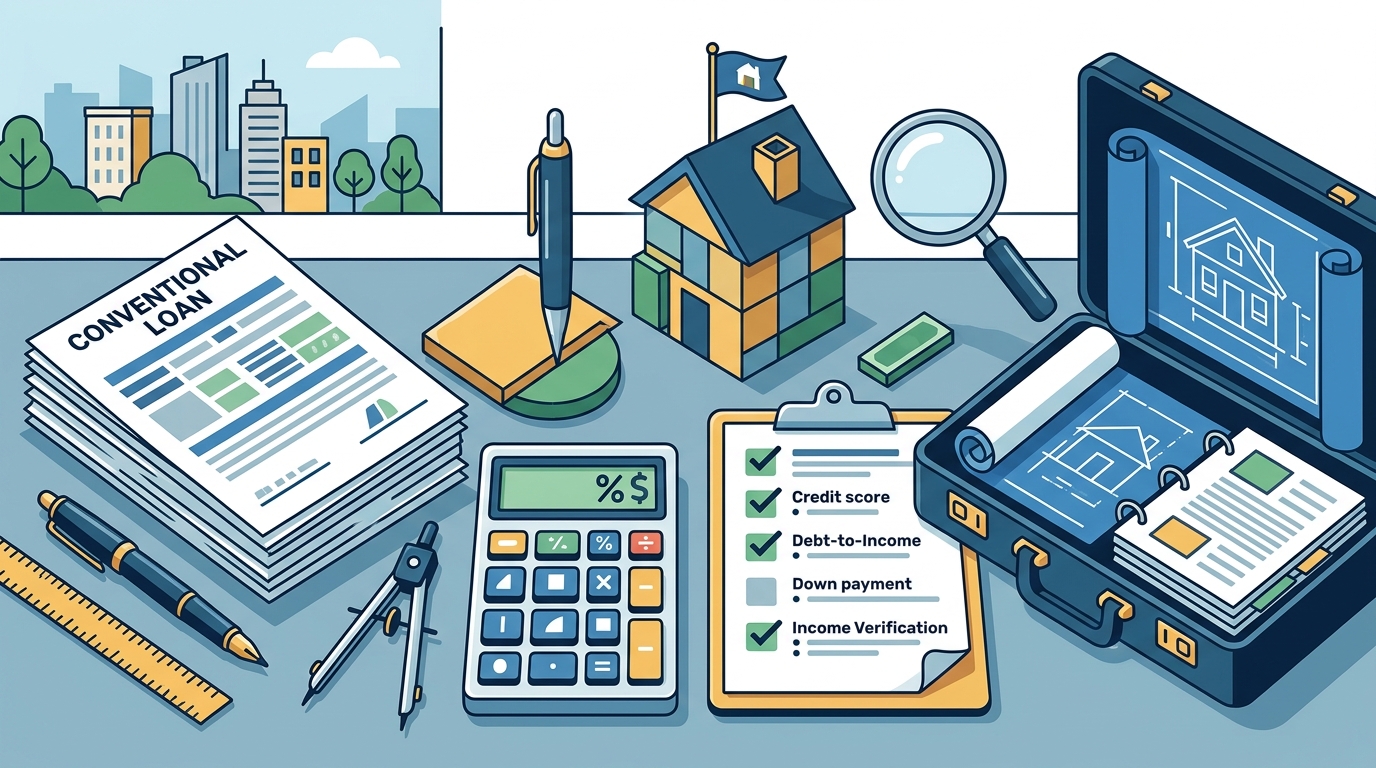
Down Payment Options and Private Mortgage Insurance
Conventional financing offers remarkable flexibility regarding initial cash requirements. Most standard programs require a minimum down payment of three percent for first-time homebuyers. Borrowers who put down less than twenty percent must purchase Private Mortgage Insurance to protect the lender against default risk. PMI premiums typically range from zero point five to one percent of the original loan amount annually. You can request a free estimate to calculate your exact monthly costs before committing to a property.
Strategic Equity Management
Strategic equity placement directly impacts your long-term financial health. Borrowers who reach the twenty percent equity threshold can request PMI cancellation, which permanently reduces their monthly obligations. Many Glen Allen buyers strategically structure their initial payments to accelerate equity accumulation. This approach minimizes interest expenses and improves overall loan-to-value ratios over time.
Debt-to-Income Ratios and Employment Verification
Lenders calculate your debt-to-income ratio by comparing your total monthly obligations against your gross monthly earnings. Most conventional programs require a maximum DTI of forty-five percent, though some flexible underwriting pathways allow up to fifty percent. You must provide comprehensive documentation including recent pay stubs, W-2 forms, and federal tax returns. Self-employed borrowers typically need two years of complete tax documentation to verify stable income streams. Contact our office directly to discuss your specific employment situation and documentation requirements.
Asset Reserves and Liquidity Requirements
Lenders frequently require borrowers to demonstrate sufficient liquid assets to cover closing costs and several months of mortgage payments. Typical reserve requirements range from two to six months of total housing expenses, depending on your credit profile. These funds must remain fully accessible and verifiable until the closing date. Maintaining clear paper trails for large deposits ensures a smooth underwriting process without unnecessary delays.
Property Appraisal Standards and Loan Limits
Every conventional mortgage requires an independent appraisal to verify the market value of the target property. Appraisers evaluate comparable sales, property condition, and neighborhood trends to determine fair market value. The loan amount cannot exceed the appraised value, which protects both the borrower and the lending institution. Glen Allen properties must meet specific habitability standards, including functional electrical systems, roofing integrity, and structural soundness. You can view our blog resources for additional guidance on navigating the appraisal process.
Regional Loan Limits and Market Dynamics
Federal regulators establish annual loan limits that vary by county and property type. Henrico County falls within a standard metropolitan statistical area, which establishes specific conforming loan ceilings. Properties exceeding these limits require jumbo financing, which carries stricter reserve and documentation requirements. Understanding these regional boundaries helps you align your budget with realistic lending parameters.
Key Takeaways
| Requirement Category | Standard Threshold | Flexible Alternative |
|---|---|---|
| Minimum Credit Score | 620 FICO | 580 with compensating factors |
| Down Payment | 3% to 5% | 20% to avoid PMI |
| Debt-to-Income Ratio | 45% maximum | 50% with strong reserves |
| Employment History | 2 years continuous | 1 year with industry consistency |
| Cash Reserves | 2 months payments | 6 months for jumbo loans |
- Conventional loans require a minimum six hundred twenty credit score for standard approval.
- First-time buyers can secure financing with as little as three percent down payment.
- Debt-to-income ratios typically cap at forty-five percent for optimal approval odds.
- Private mortgage insurance applies automatically when equity falls below twenty percent.
- Independent brokers like Duane Buziak Mortgage Maestro provide access to multiple lender overlays.
- NoTouch credit inquiries allow you to shop rates without damaging your financial profile.
- Glen Allen properties must meet strict habitability standards to qualify for conventional financing.
Frequently Asked Questions
What is the minimum credit score for a conventional loan in Glen Allen?
Most conventional loan programs require a minimum FICO score of six hundred twenty. Borrowers with scores between six hundred and twenty and six hundred seventy-nine will face slightly higher interest rates. Scores above seven hundred and forty consistently qualify for the most competitive pricing tiers available today.
Can I buy a home in Glen Allen with less than five percent down?
Yes, many conventional loan programs allow down payments as low as three percent for qualified buyers. You will need to purchase Private Mortgage Insurance until your equity reaches the twenty percent threshold. This insurance premium adds to your monthly payment but remains significantly cheaper than government-backed alternatives.
How do lenders calculate my debt-to-income ratio?
Lenders divide your total monthly debt obligations by your gross monthly income before taxes. This calculation includes credit card minimums, auto loans, student debt, and your projected mortgage payment. Most underwriters prefer a maximum ratio of forty-five percent to ensure sustainable repayment capacity.
What documentation do I need to secure preapproval?
You must provide recent pay stubs, W-2 forms from the past two years, and complete federal tax returns. Bank statements covering the last sixty days verify your available cash reserves and source of funds. Self-employed borrowers typically need additional profit and loss statements to verify income stability.
Does a NoTouch credit pull affect my loan eligibility?
Soft credit inquiries do not impact your credit score or your ability to secure financing. This method allows you to compare multiple lender offers without triggering hard pulls that temporarily lower your rating. You can explore your options safely before committing to a specific property purchase.
How long does the underwriting process typically take?
Standard underwriting timelines range from thirty to forty-five days from application to closing. Properties requiring additional documentation or complex financial situations may extend the process slightly. Working with an experienced broker streamlines the workflow and reduces unnecessary delays.
Next Steps and Consultation
Navigating conventional loan requirements in Glen Allen requires precise financial planning and expert guidance. You can schedule a complimentary consultation to review your specific financial profile and explore customized financing options. Our team specializes in matching borrowers with the most favorable underwriting pathways available today. Visit our Contact Duane page to request a personalized quote. Secure your financing today and move closer to your Glen Allen homeownership goals.